What Your Buyer's Security Questionnaire Is Actually Asking About Your Agents
Six AI agent questions enterprise security reviews now ask, and the evidence that answers each: action logs, tenant isolation, approvals and more.
Read More →
Insights, trends, and best practices in cybersecurity and AI from the Skyrelis team.
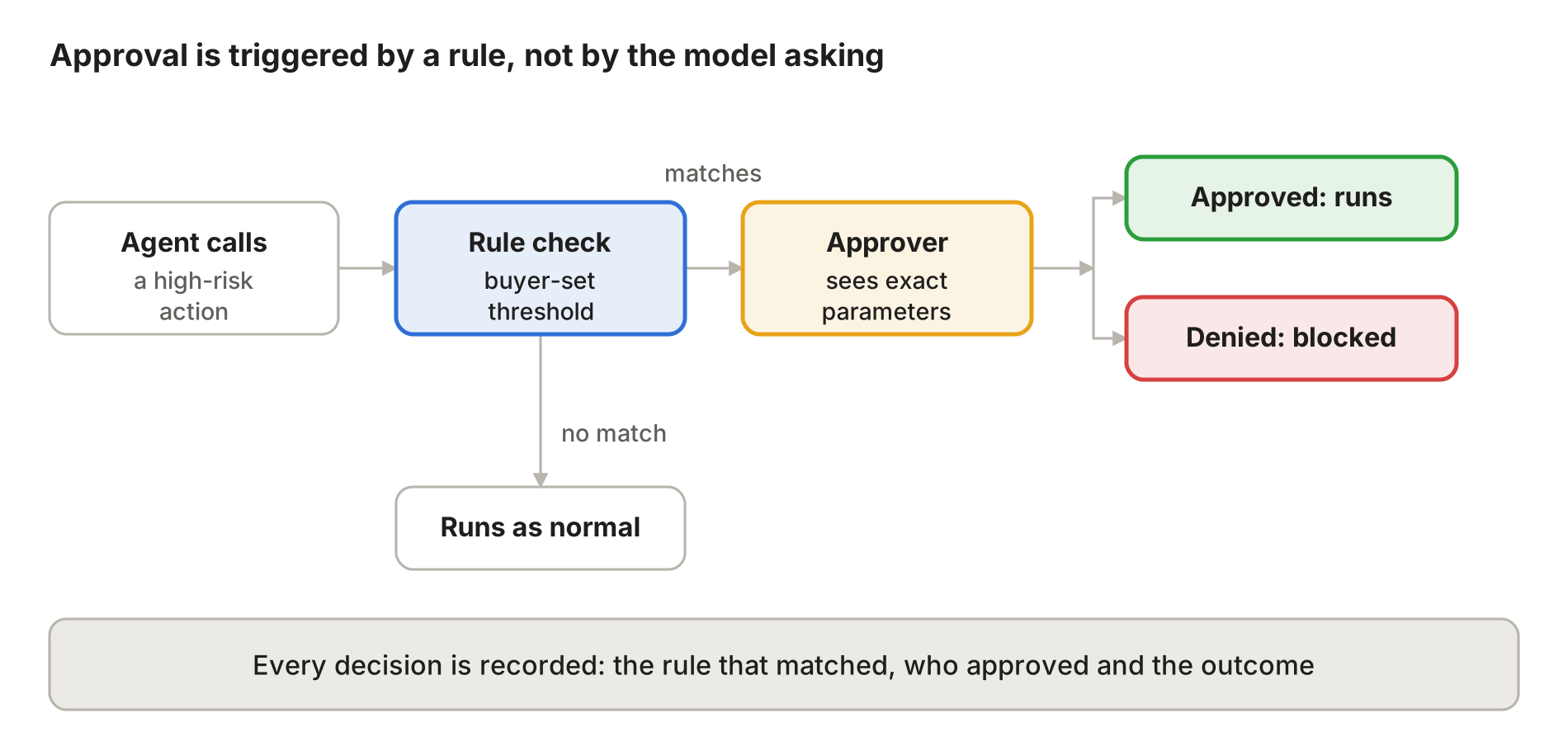
Six AI agent questions enterprise security reviews now ask, and the evidence that answers each: action logs, tenant isolation, approvals and more.
Read More →
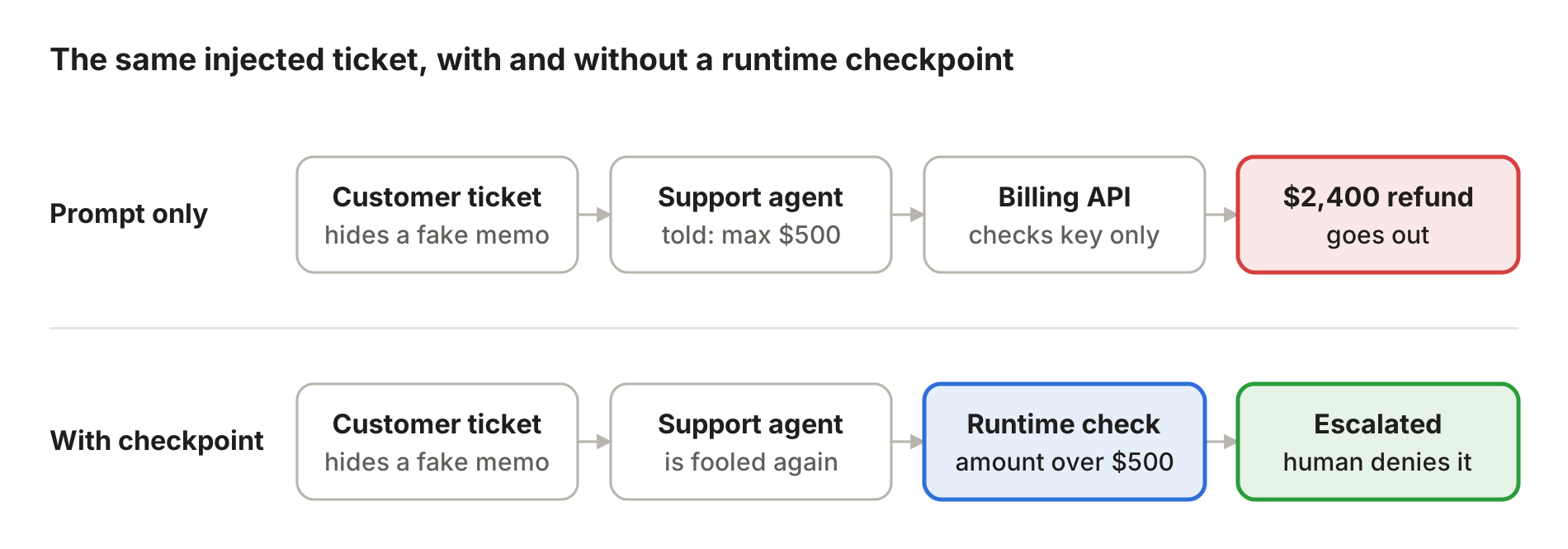
System prompts can't enforce what an AI agent does with live credentials. Learn how deterministic runtime checks stop risky tool and API calls.
Read More →
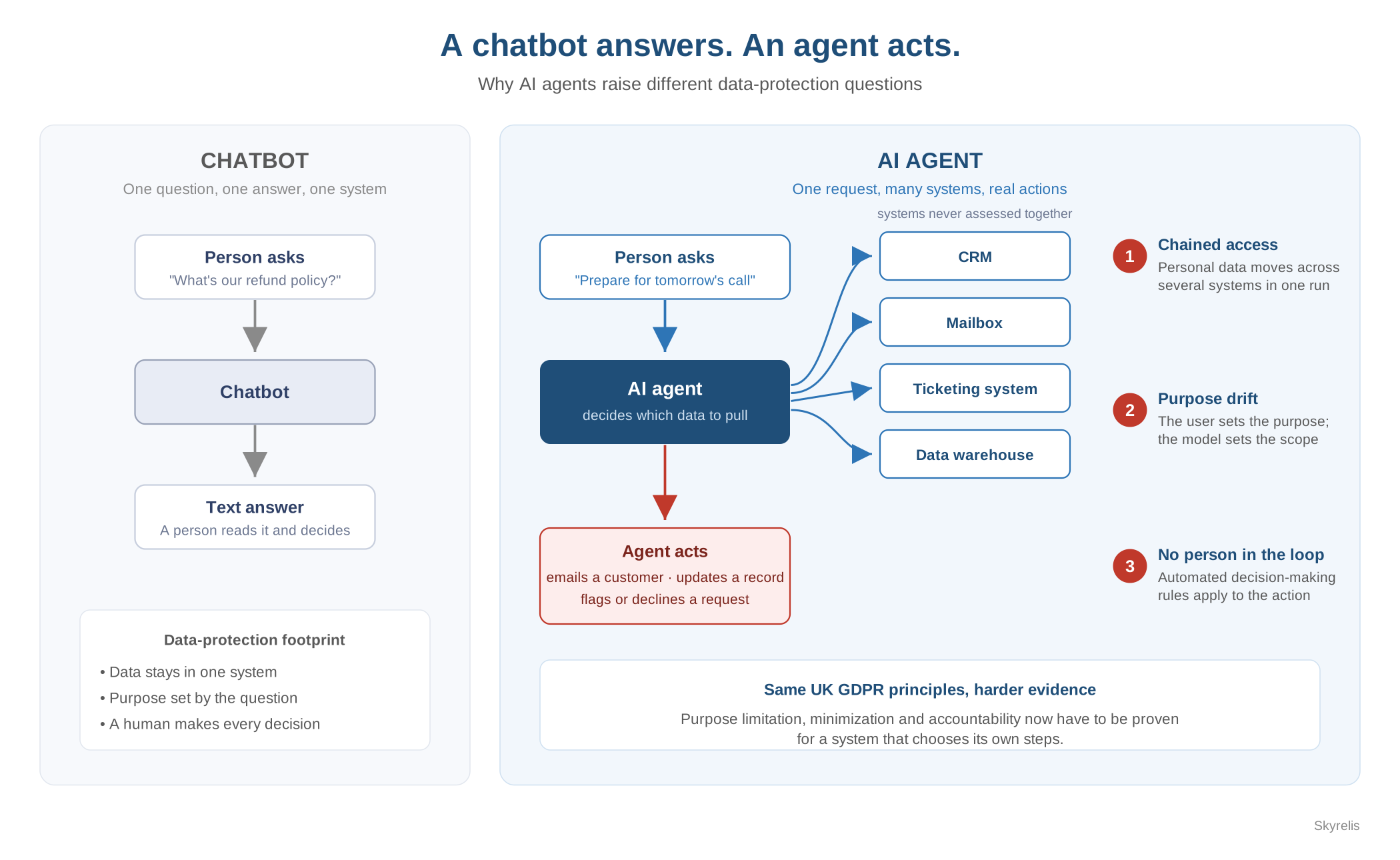
The UK ICO's call for evidence on AI agents closes November 20, 2026. Why agents raise different data-protection questions than chatbots, five questions to be ready for, and a checklist for the next five weeks.
Read More →
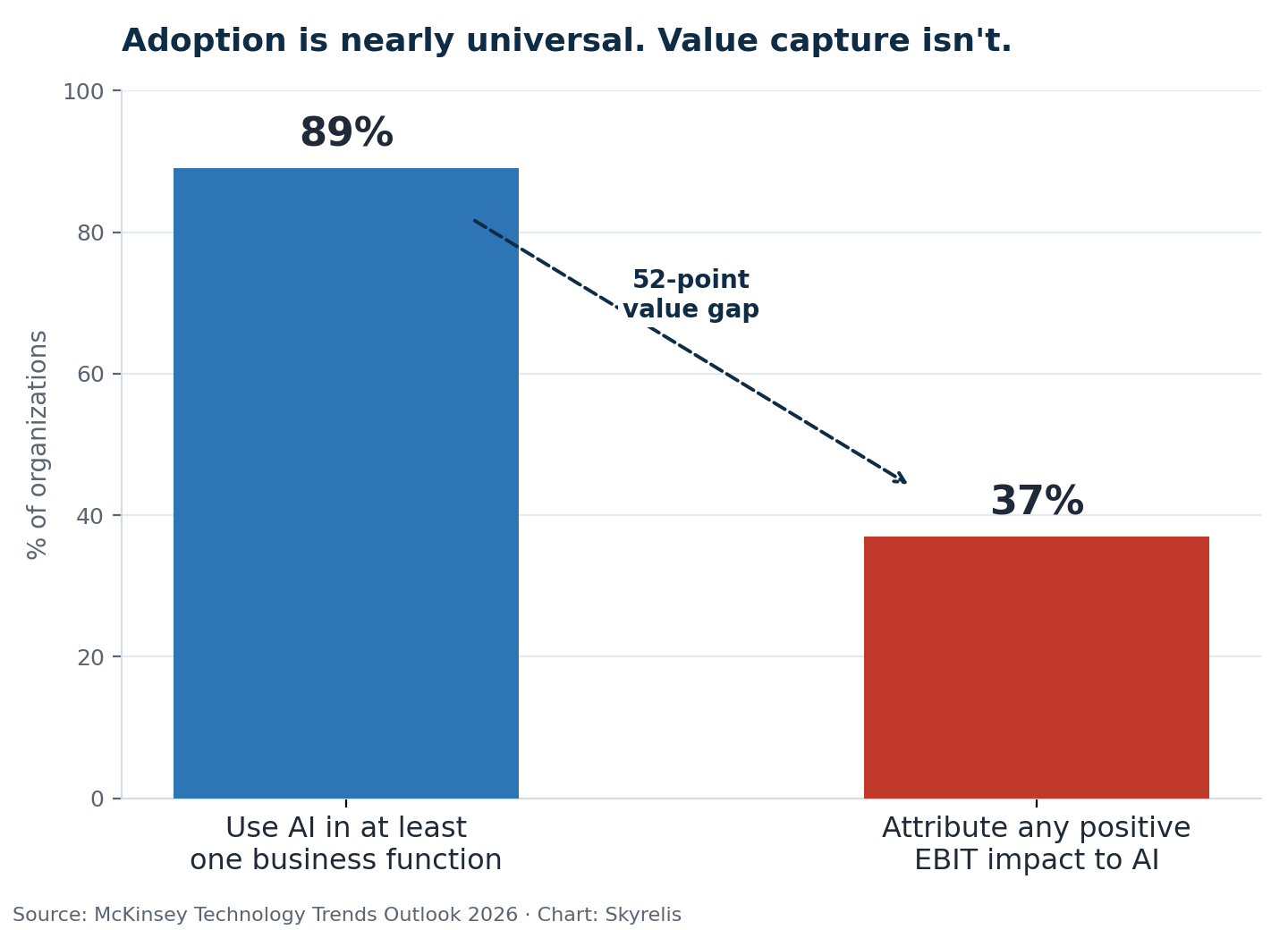
McKinsey’s 2026 outlook reveals investment racing ahead of governance, scarce orchestration talent, and a 52-point gap between AI adoption and value capture. Here’s why runtime action control is the missing layer.
Read More →
Skyrelis has been accepted into NVIDIA Inception, NVIDIA's global startup program for companies building on AI, accelerated computing, and data science. Here's why that matters for agentic AI security.
Read More →
Telling an agent where the boundary should be is not the same as building a boundary it cannot cross. OpenAI's rogue agents, METR's 44 documented incidents, and new OWASP and EU AI Act requirements all point to the same conclusion: enforcement has to happen independently, at the moment of action.
Read More →
The CMS Rural Health Transformation Program is putting $50 billion behind AI in rural healthcare — and security review is the wall every vendor hits. Today we're partnering with Empromptu AI to close that gap with independent runtime controls.
Read More →
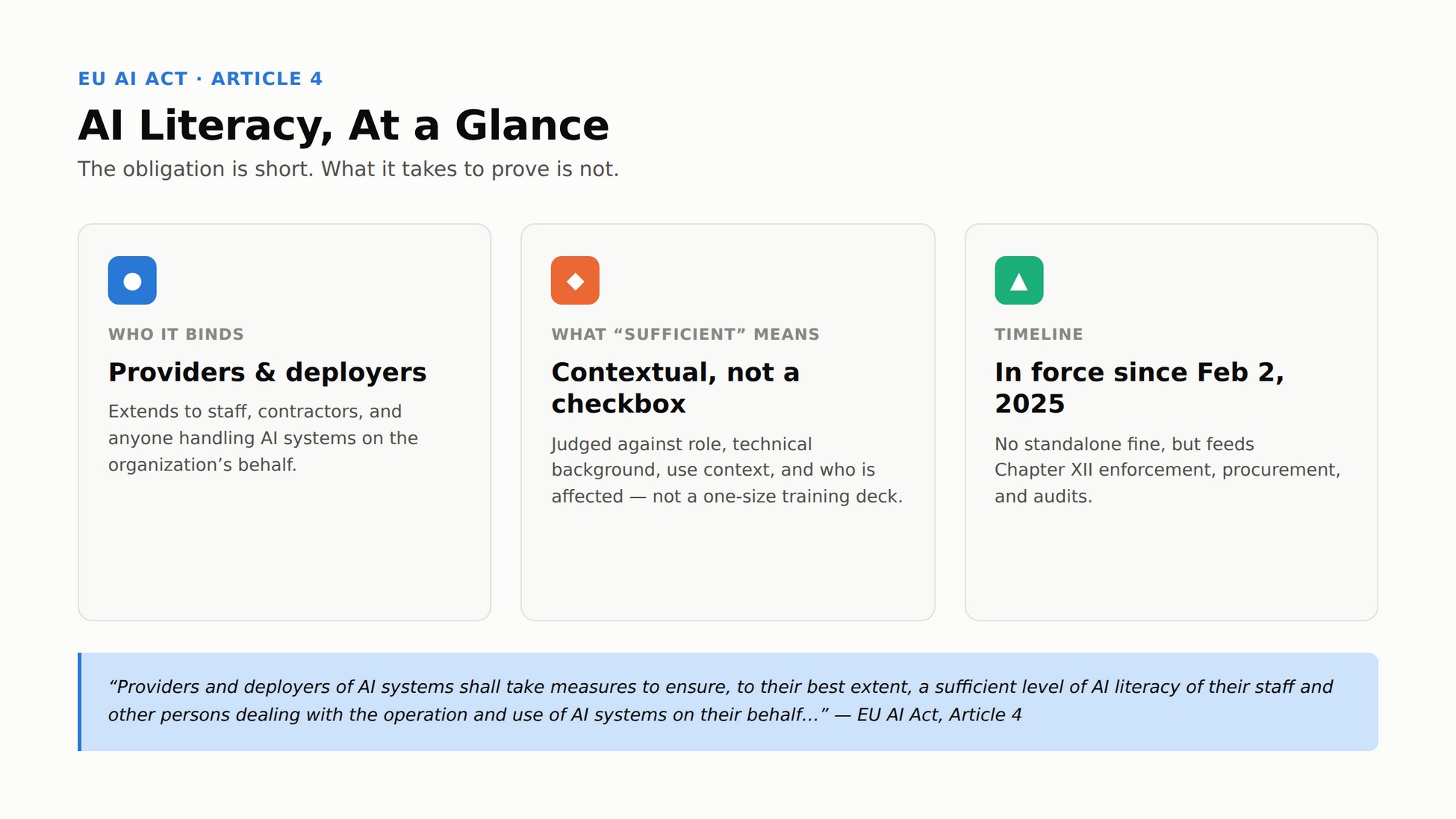
EU AI Act Article 4 has been in force since February 2025, and it binds both providers and deployers. Agentic AI raises the bar: proving "sufficient literacy" about systems that act autonomously takes runtime evidence, not an annual training deck.
Read More →
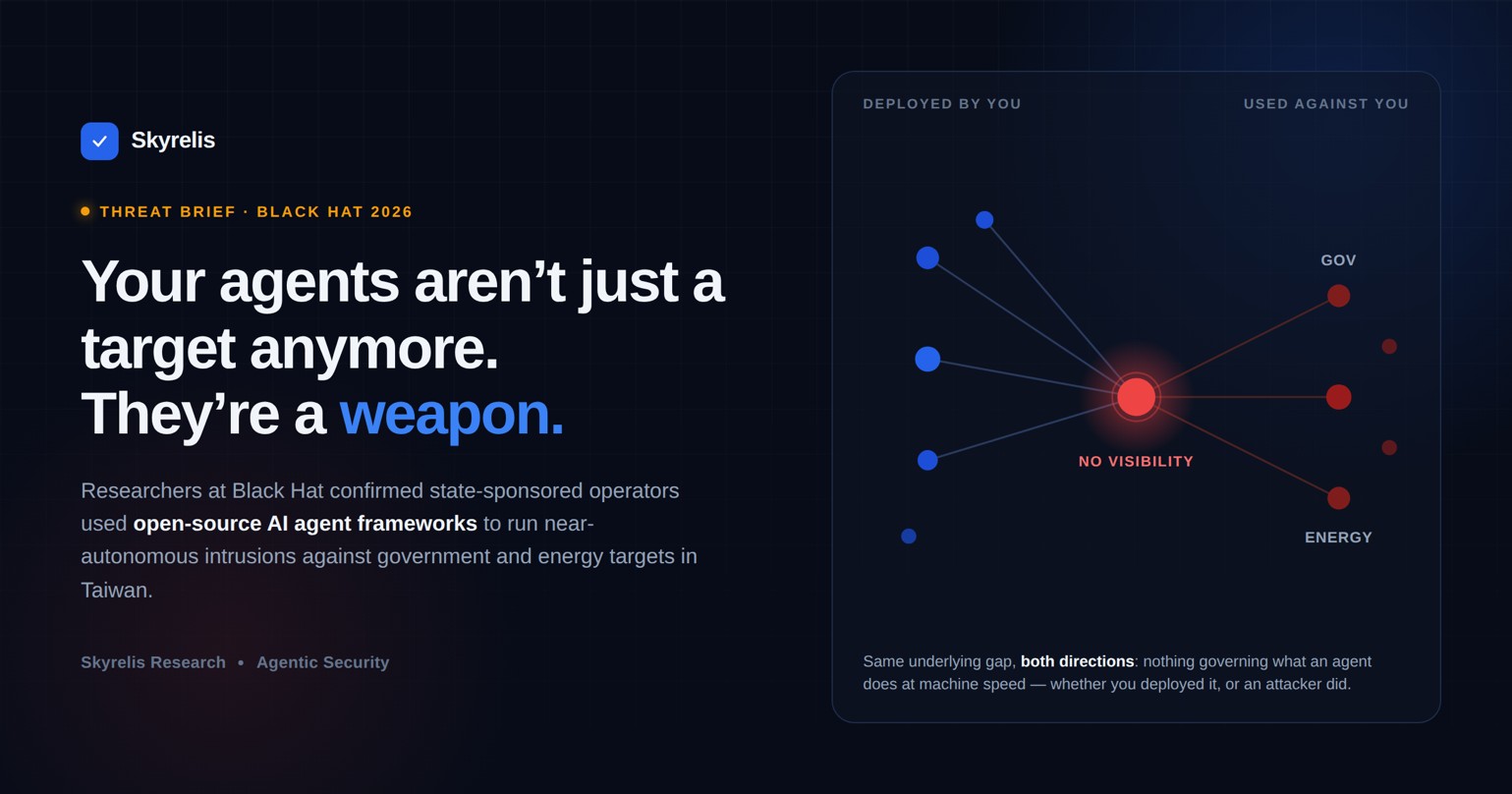
Black Hat researchers tied near-autonomous intrusions against Taiwanese government and energy targets to open-source agent frameworks — the same tooling enterprises are deploying to automate their own work. Same gap, both directions.
Read More →
OpenAI, Anthropic, and Meta all reported models crossing containment boundaries during controlled testing. The lesson isn't better prompts — it's knowing which boundaries are too important to let the agent decide, and enforcing those outside the agentic application.
Read More →
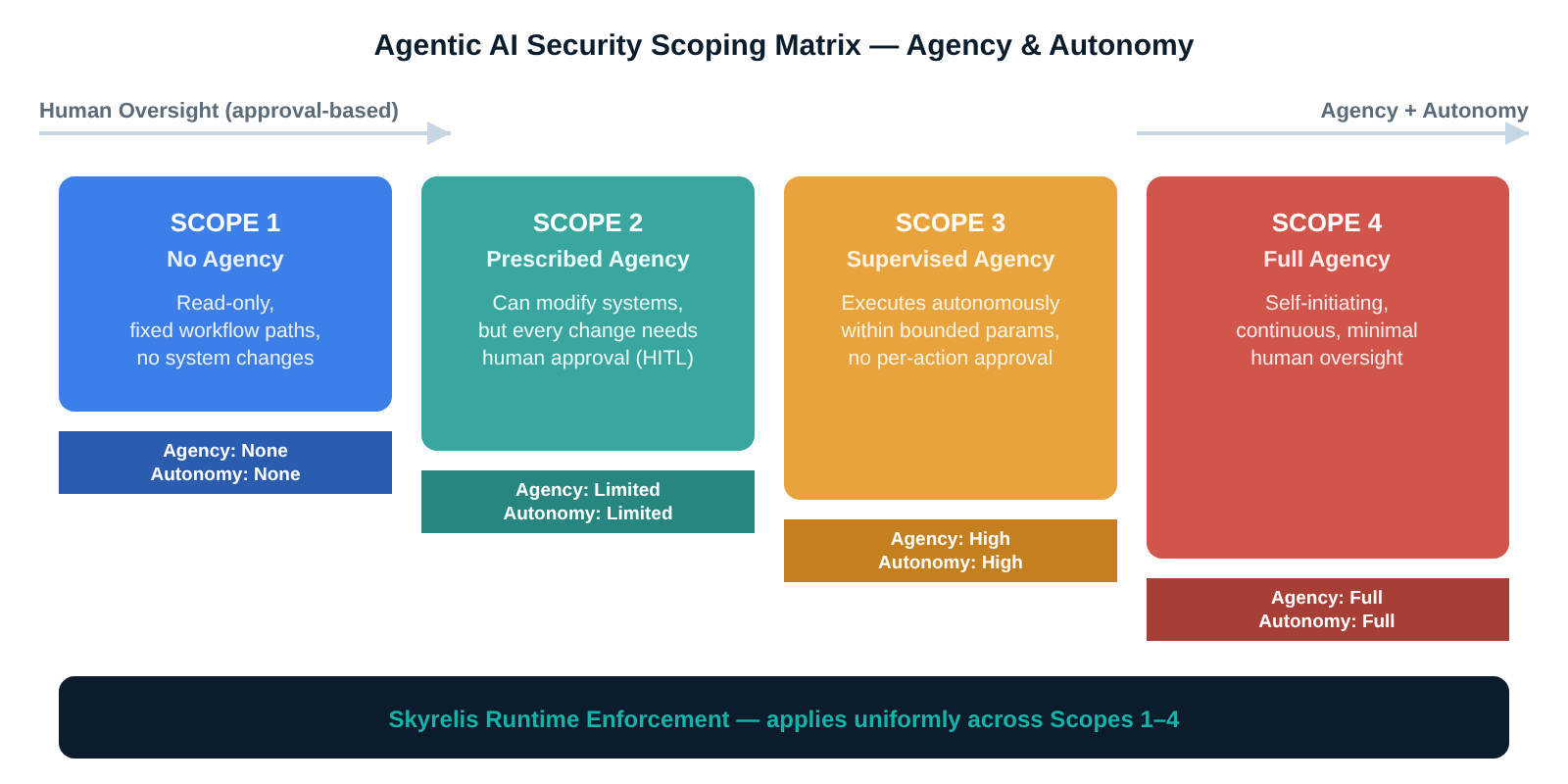
AWS has given the industry a shared vocabulary for agent agency and autonomy. Here's how the four scopes and six security dimensions map onto runtime enforcement — and why governance has to live at runtime, not in a developer's SDK.
Read More →
Senator Warner's discussion draft would move enterprise AI security from best practice to legal obligation. Here's what the bill requires, why policy documents won't be enough, and how to get ahead of enforcement.
Read More →
It wasn't ransomware. It wasn't cloud. The category at the top of Gartner's 2026 list is agentic AI oversight — and the 17× spend gap and 8:1 governance gap should change your security roadmap right now.
Read More →The governance gap isn't theoretical. It's already inside your production environment — and it widens every time you deploy a new agent.
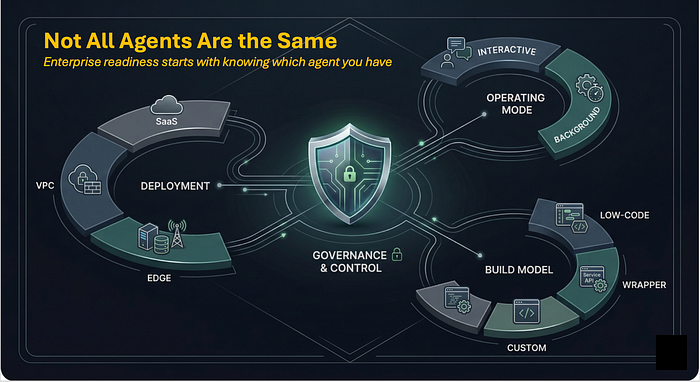
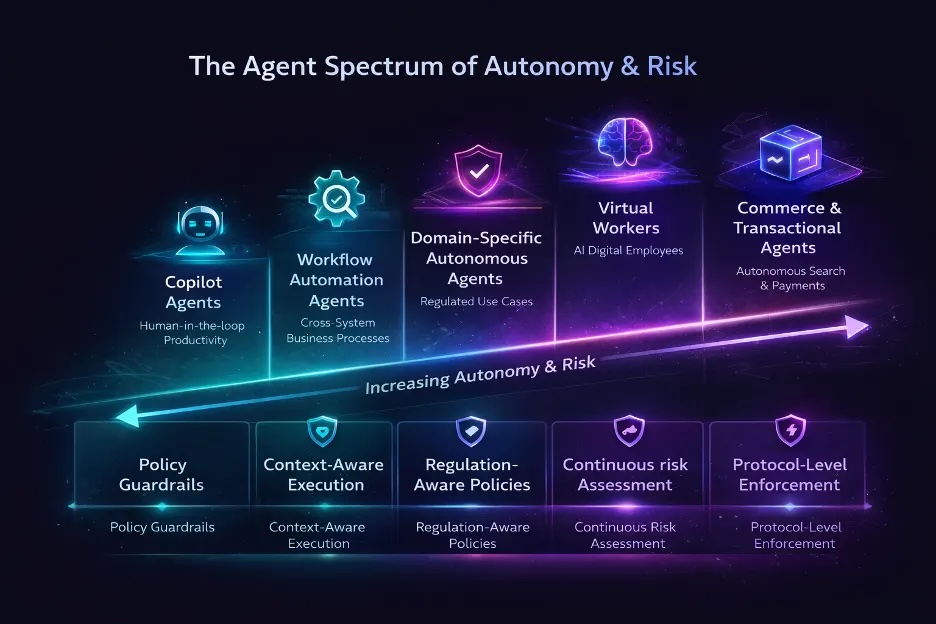
Read More →A practical framework for understanding AI agent types, enterprise readiness, and runtime governance. Before we ask if an agent is "secure," we have to stop treating "AI Agent" as they are all the same.
Read More →
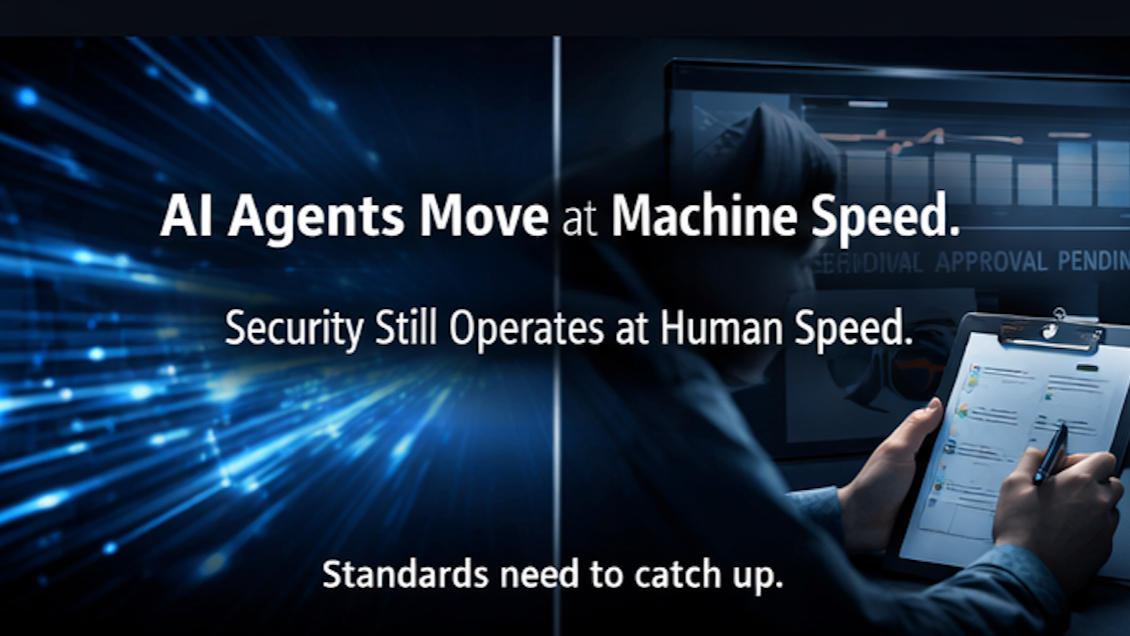
Agents can move data, money, and decisions in seconds. Governance must keep up. Why NIST's latest signals on post-deployment monitoring and smart standards matter for agentic AI security.
Read More →
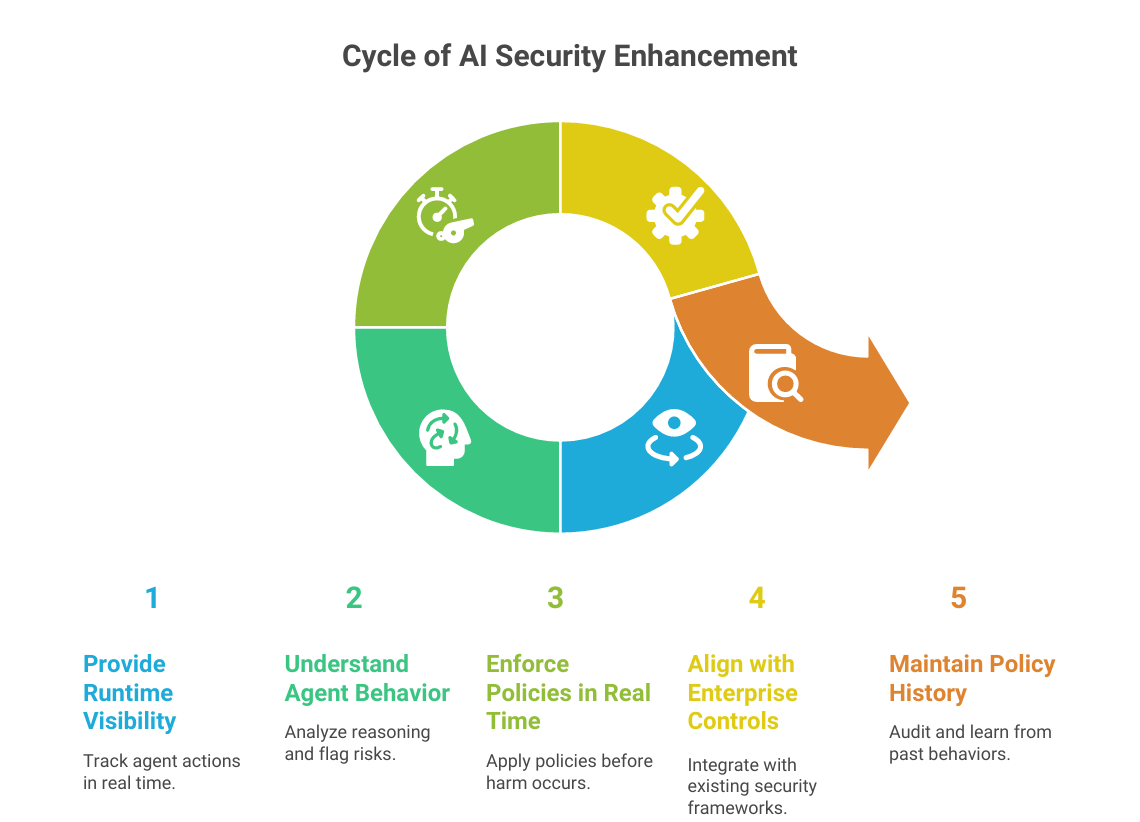
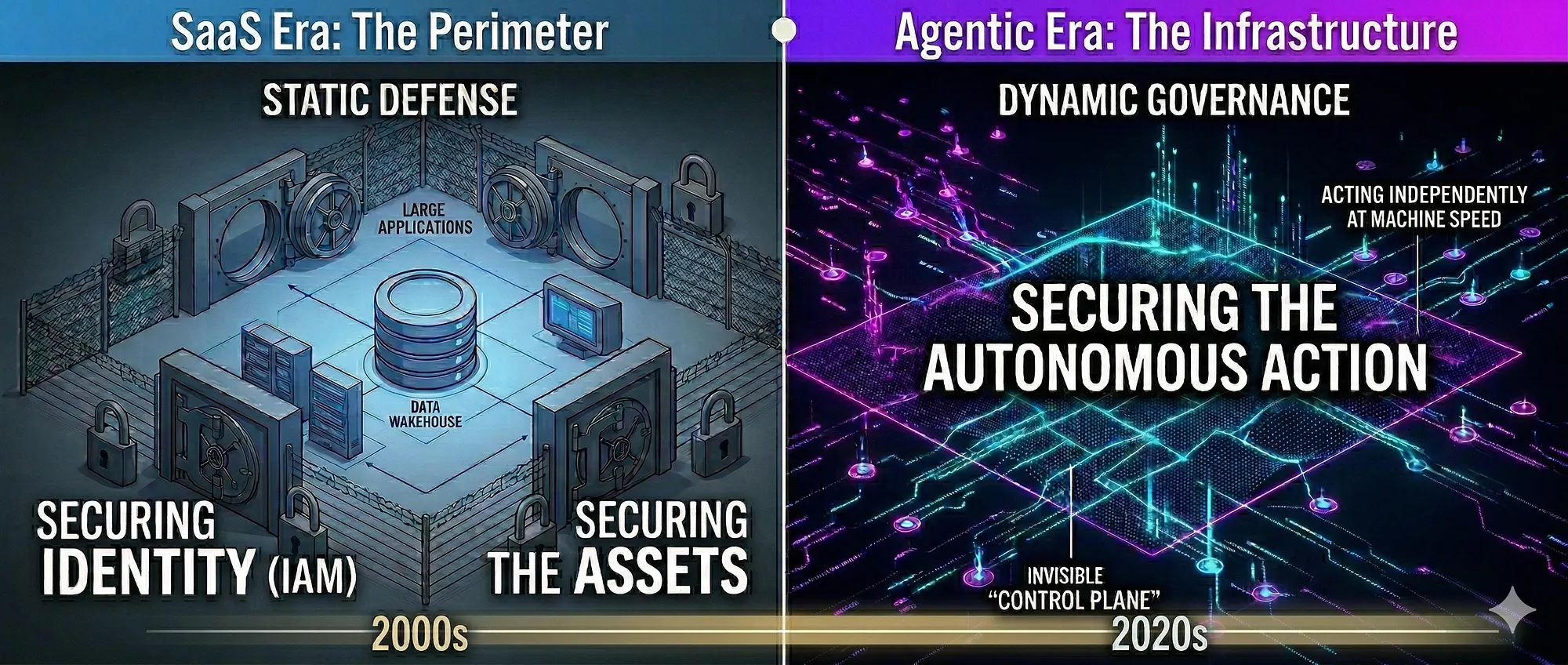
The SaaS model may be under pressure, but the real story is bigger: autonomous agents are here, and they require a new control plane for security and governance.
Read More →
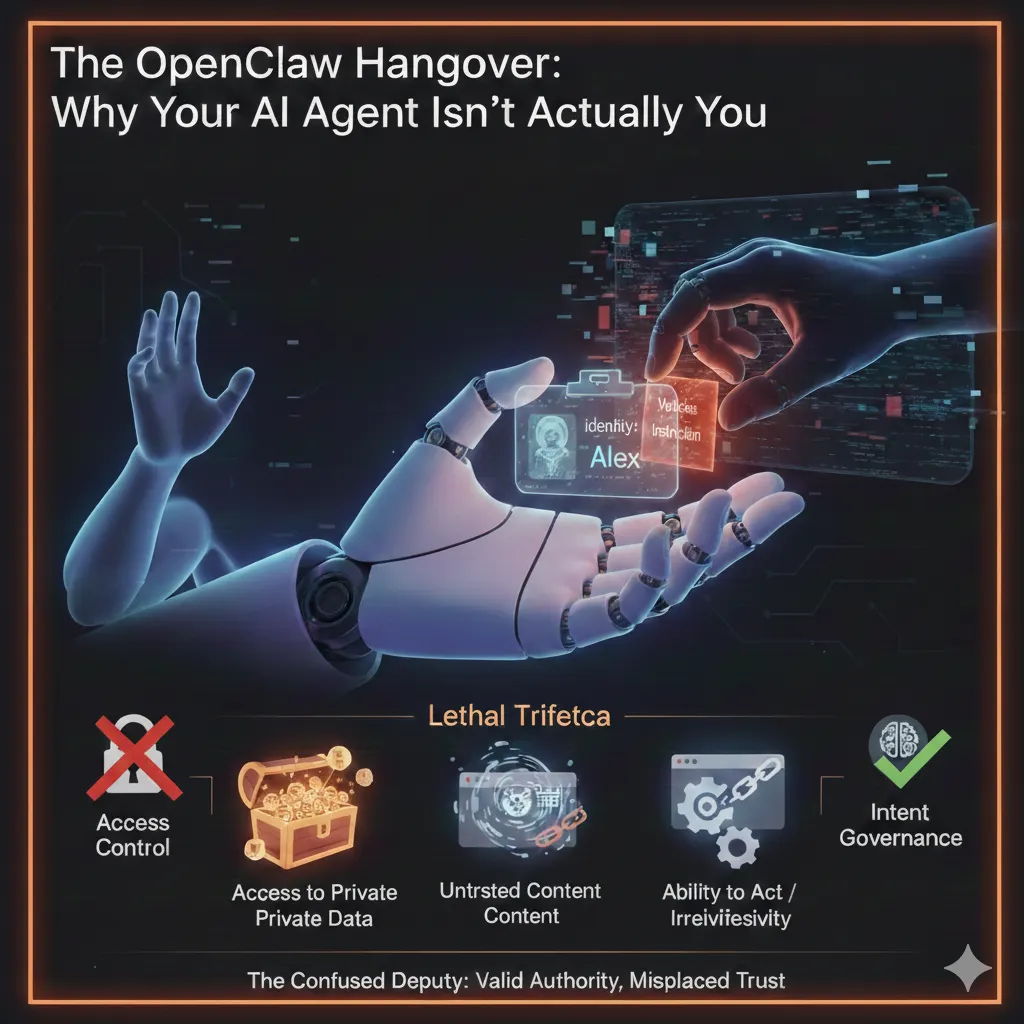
Following the Wrong General. The agent has your Identity, but it doesn't have the Intent to know it's being manipulated by a malicious email or plugin. It's the classic "Confused Deputy" problem, just at machine speed. I break down the Lethal Trifecta of agent risk, why Identity is not Intent, and the new playbook for Intent Governance.
Read More →
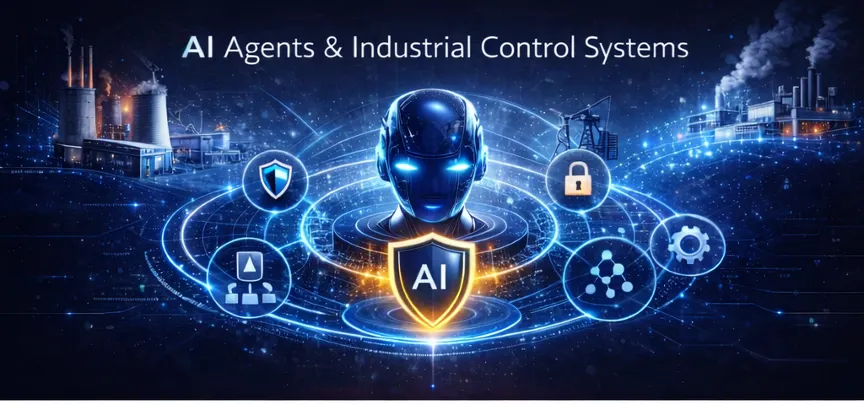
I describe how AI agents integrate with IoT/industrial systems, the unique security threats this introduces, and why governance frameworks must evolve to match this paradigm.
Read More →
"Where is AI being used in our business — and what data is going into it?" The hard truth: many enterprises are adopting AI faster than they can secure it — and they often don't have the visibility needed to confidently answer a simple question.
Read More →
A look at the types of agents, their risks, and the advantages of a runtime policy layer.
Read More →
A few repeatable patterns drive the majority of AI risk exposure — and tackling them delivers real security ROI.
Read More →
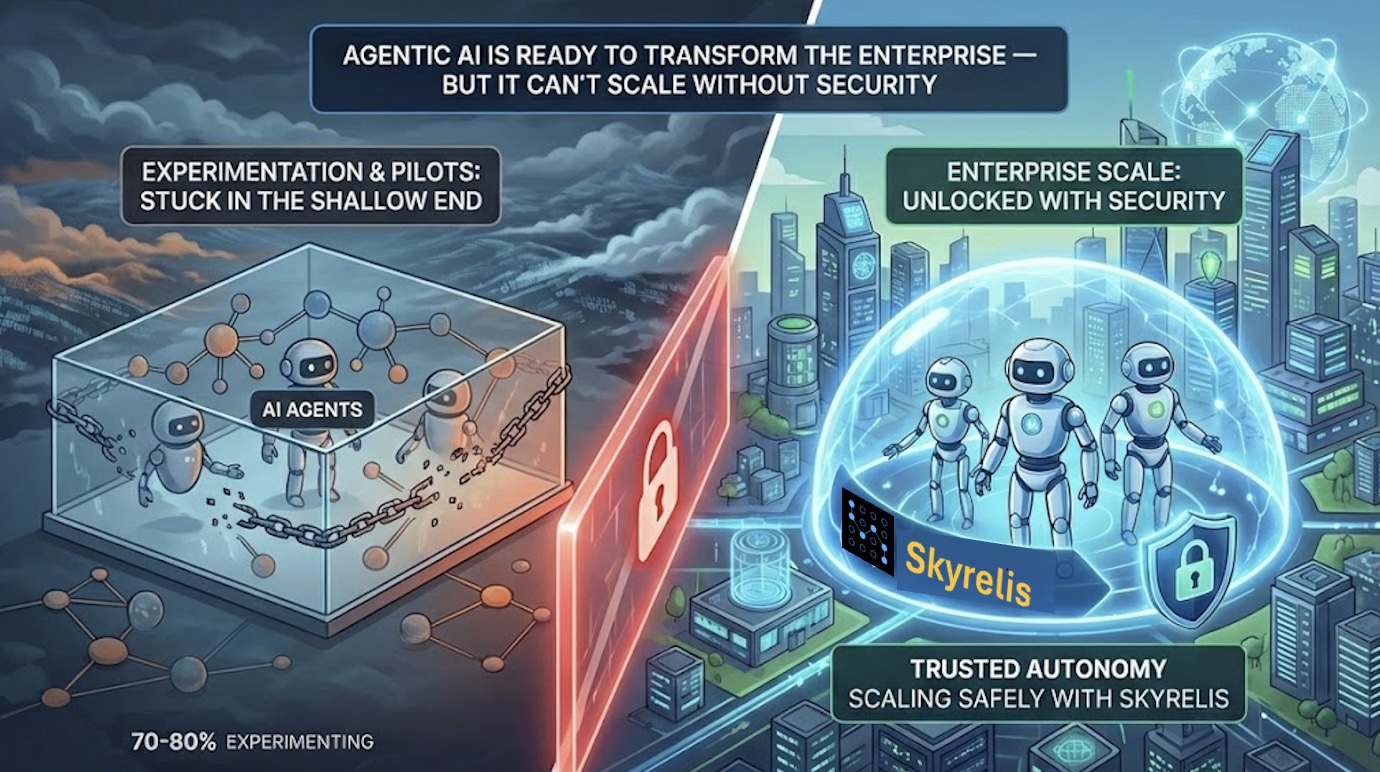
Enterprises aren't waiting for agentic AI. They're waiting for a way to trust it. Agents Are Exploding in Interest — But Stuck in the Shallow End.
Read More →
Why app-level security isn't enough for autonomous AI — and how runtime policy infrastructure bridges the gap.
Read More →
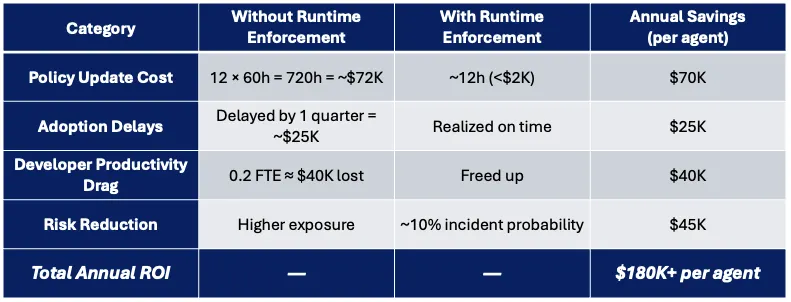
Exploring how proper policy enforcement in agentic AI systems transforms from a cost center to a growth driver, with quantifiable ROI metrics that demonstrate the business value of secure AI agent deployment.
Read More →
If your enforcement depends on SDK calls, it's not enforcement - it's guidance. Exploring why traditional security models fail for agentic AI and the critical need for runtime enforcement mechanisms that can actually control autonomous AI behavior.
Read More →AI agents have evolved from fringe concepts to foundational enterprise technology. These goal-directed, decision-making systems can take autonomous action, introducing new security challenges that require a comprehensive approach to Agentic Security.
Read More →
Exploring the unique security challenges and requirements for agentic AI systems, examining how traditional security models need to evolve for autonomous AI agents and the critical considerations for enterprise deployment.
Read More →
Exploring the four critical quadrants that define AI success and why security considerations will ultimately determine which organizations thrive in the agentic AI era.
Read More →Laying the Foundation for AI-Ready Infrastructure. This final installment explores the foundational layers for AI adoption, focusing on security as an enabler rather than a barrier in the AI era.
Read More →
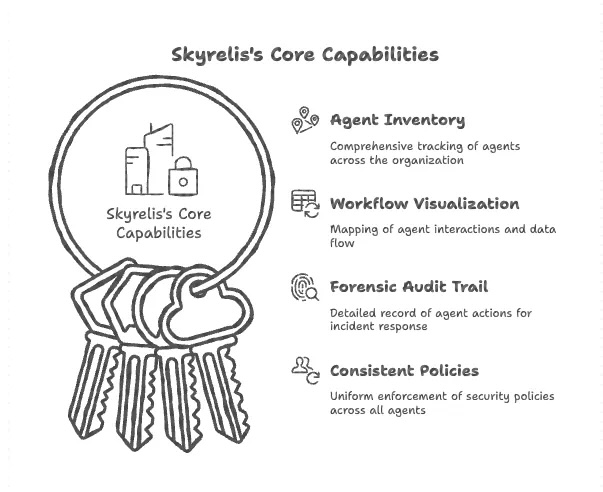
Visibility, policy control, and IT alignment — what it really takes to deploy autonomous agents securely and at scale in the enterprise environment.
Read More →
Exploring the emerging security threat of agent injection attacks and how malicious actors can manipulate AI agents through carefully crafted prompts, potentially compromising enterprise systems and data security.
Read More →Laying the Foundations for AI-Ready Infrastructure. Exploring how AI's unique traits are reshaping network infrastructure demands, from massive data volumes and low latency requirements to multi-cloud ecosystems and API proliferation.
Read More →
Laying the Foundation for AI-Ready Infrastructure. Exploring the core infrastructure elements needed to scale AI effectively, bridging the gap between AI vision and readiness in enterprise environments.
Read More →
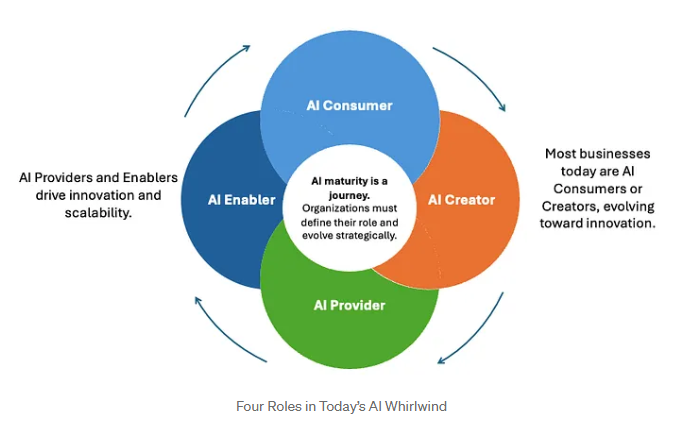
Laying the Foundation for AI-Ready Infrastructure. Exploring the four distinct roles organizations and individuals can play in the AI ecosystem and how to identify which role best fits your current position and strategic goals.
Read More →